
Micro-investing means to put small amounts of money into investments, often automatically, and not to wait for a large lump sum. The two most common methods are round-ups and percentage plans. Round-ups invest the spare change from each card purchase. Percentage plans invest a fixed slice of every payment. It is an easy way to build an investing habit, but small amounts produce small results. Like all investing, it carries the risk of loss.
How does micro-investing work?
Traditional investing assumed that you first saved a meaningful sum. Then you opened a brokerage account and bought whole shares. Micro-investing removes those hurdles. An app connects to your card or bank account and collects small amounts in the background. It invests them when they reach a minimum.
Two building blocks make this possible. Fractional ownership lets you buy a slice of a share, a fund unit or a token. So a few dollars can still go into an expensive asset. Automation means that you set the rule once and the app follows it. Your investing then no longer depends on memory or willpower.
The three common rules are round-ups, a slice of every payment and small recurring deposits.
How do round-ups work?
Round-ups are the best-known form of micro-investing:
- You link a debit or credit card to the app.
- The app rounds each purchase up to the next whole dollar. A $4.60 coffee becomes $5.00, so the app sets aside $0.40.
- The spare change collects until it reaches a threshold, often a few dollars.
- The app moves that money from your bank account and buys fractional units of the portfolio you chose.
Round-ups feel painless because each amount is tiny. That is also their limit. Say you make forty card payments a month, and each one leaves about 50 cents of change. Together they add up to roughly $20, no matter how much you spent in total.
What does “invest a slice of every payment” mean?
A percentage plan invests a fixed share of each payment, not the spare change. Set the plan at 2 percent, and a $50 grocery bill sends $1 to your portfolio. A $1,200 rent payment sends $24.
Compared with round-ups, a percentage plan is more predictable. The amount grows with the size of the payment. It does not depend on whether a price happens to end in 5 cents or 95 cents. A plan can also apply to money that comes in, not just money that goes out. For example, a freelancer can invest a slice of every paid invoice.
The trade-off is that it links investing to spending. Spend more and you invest more. That is useful as a habit. But do not let it become a reason to spend.
How do the methods compare?
| Topic | Round-ups | Slice of every payment | Recurring deposit |
|---|---|---|---|
| Amount invested | Spare change, up to $0.99 per purchase | A set percentage of each payment | A fixed amount on a schedule |
| Predictability | Low | Medium, scales with payments | High |
| Best for | Starting a habit | Investing that grows with activity | Steady long-term saving |
What are the benefits of micro-investing?
- A low barrier to entry. Many apps let you start with a few dollars, because fractional ownership removes the need to buy whole units.
- Automation beats willpower. After you set the rule, investing happens without another decision.
- Regular buying spreads out timing. Dollar-cost averaging means that you invest small amounts often. Then you do not put everything in at one bad moment. It does not guarantee a profit or protect against losses.
- Access to diversified assets. Small sums can go into funds that hold many companies. They can also go into assets such as gold that once required larger purchases.
What are the downsides and risks?
- Investments can lose value. Micro-investing uses the same markets as any other investing. Prices fall as well as rise, and past performance does not predict future returns.
- Fees can outweigh small balances. A flat $3 monthly fee on a $500 balance is $36 a year, or 7.2 percent of the balance. Percentage-based or low flat pricing usually suits small accounts better.
- Small amounts give small results. Spare change alone rarely funds a retirement. Micro-investing works best alongside regular saving, not instead of it.
- Provider risk. Check how the provider holds your assets, who the custodian is and how regulators oversee the provider where you live. For tokenized assets, also check what backs each token and how its audits work.
- Record keeping. Hundreds of tiny purchases can create many separate tax records. Make sure that the app gives you clear statements.
Who is micro-investing for?
Micro-investing suits people who find it hard to save, are new to investing, or want a habit that runs in the background. It also suits people who want small, regular exposure to one asset, such as gold, without trying to time the market.
It is a weaker fit if you carry expensive debt. Standard money guidance usually puts the repayment of high-interest balances first. It is also the wrong place for an emergency fund or for money that you need soon. The value can drop just when you need it. None of this is personal financial advice. If you are unsure, speak to a licensed advisor in your country.
What should a fintech consider before offering it?
Imagine a neobank (a bank that works only through an app) that wants to add round-ups to its debit card. The card data is the easy part. The bank also needs:
- a licensed investment arrangement
- a custodian for the assets
- a low-cost way to buy fractions
- KYC (know-your-customer) and suitability checks
- clear disclosures about risk and fees
Every tiny purchase also has to settle and reconcile cleanly. If not, operations costs eat the margin.
Tokenized assets can help here. A fund unit or a gram of gold can be a token on a blockchain (a shared digital ledger). Then the app can buy, settle and record a fraction in one step. Our asset tokenization guide explains how issuers create and back those tokens. The post tokenized gold explained covers the most common starting asset.
How will H0X Pay approach micro-investing?
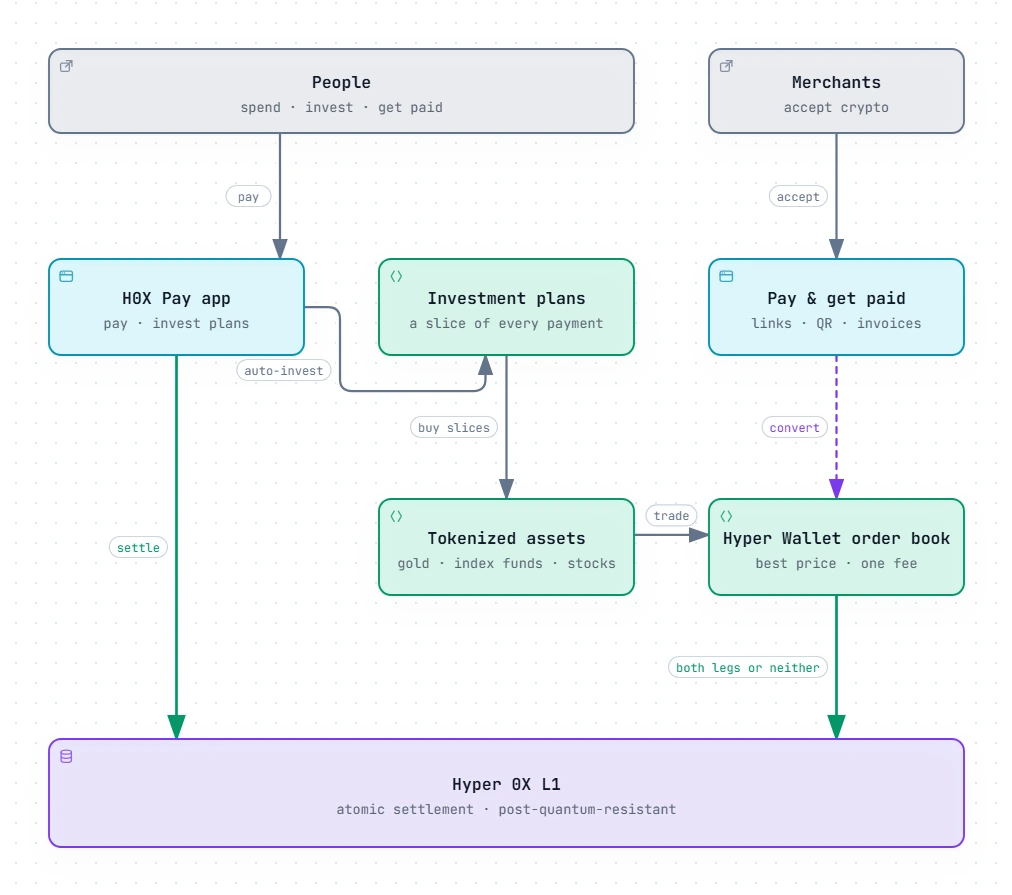
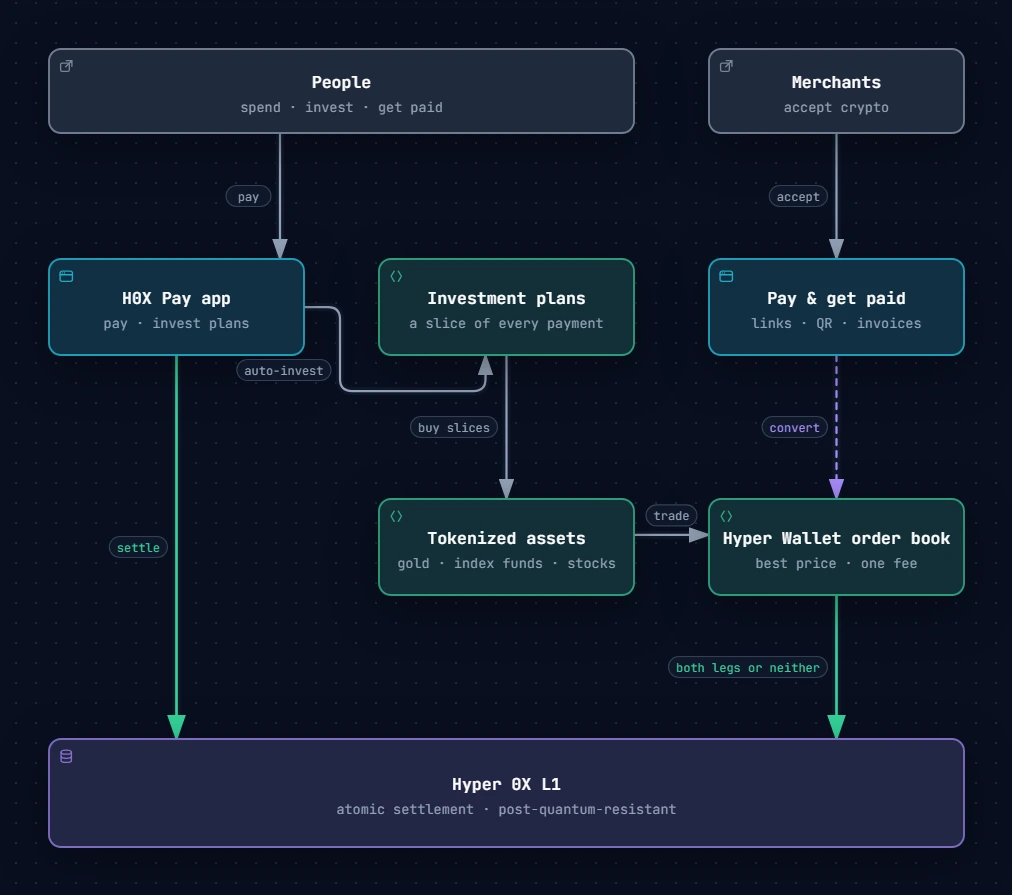
H0X Pay is coming soon from Buckleson. It will let you pay and get paid in crypto. You will also set an investment plan once, for example a small percentage of every payment. Your portfolio then grows as you spend. The diagram at the top of this page shows the planned flow.
The roadmap starts with tokenized gold, bought in small slices from everyday payments. Index funds, tokenized stocks and bonds come next in the plan, chosen for each market. After that, users will make and receive crypto payments from the same app. Everything is designed to settle on Hyper 0X, the blockchain we built. If you run a business, see how blockchain payments work for merchants.
Where should you start?
- Decide what the money is for and how long it can stay invested.
- Pick one method: round-ups for a gentle start, a percentage plan that grows with activity, or a fixed recurring deposit.
- Compare total yearly fees against the balance you expect to hold in the first year.
- Check how the provider holds the assets, who audits them and how your country regulates the provider.
- Start small. Review the plan after a few months. Adjust the rule, but do not chase prices.
H0X Pay is coming soon to make investment plans part of everyday payments. Book a call to learn more.
Architecture in detail
Frequently asked questions
How much money do you need to start micro-investing?
Many apps let you start with a few dollars, because they buy fractions of shares, fund units or tokens. The bigger question is cost. A flat monthly fee can eat a large share of a small balance. Check the fees before you start.
Is micro-investing safe?
Micro-investing uses the same markets as regular investing. Your balance can go down as well as up. Safety also depends on the provider. Check how the provider holds your assets, who the custodian is and how your country regulates the app.
Is micro-investing worth it?
It is worth it as a habit that runs in the background and gets you started. On its own, spare change rarely adds up to a large sum. It works best alongside regular saving, not instead of it.
