
We recommend that most banks and fintechs launch a crypto wallet with a white-label SDK, not build one from scratch. A build from scratch means years of work on key management, dozens of chain integrations, swaps and security reviews. A white-label wallet gives you a proven, multi-chain product under your brand, so your team can focus on customers and business rules.
What does a modern crypto wallet need?
Users now expect far more than send and receive:
- Many chains: Bitcoin, Ethereum and other EVM chains (chains that run Ethereum-style smart contracts), Solana, Tron, TON, XRP, Stellar, Sui.
- Swaps and trading: best-route swaps from any coin page, with MEV protection (protection from bots that reorder trades for profit).
- More than coins: tokenized gold and stocks, pre-IPO stocks, index funds, perpetual futures and prediction markets.
- Easy top-ups: deposits straight from exchanges such as Binance and Coinbase.
- dApps and NFTs: WalletConnect support for dApps (blockchain apps) and an NFT view.
- Simple sign-in: no seed phrases, thanks to account abstraction.
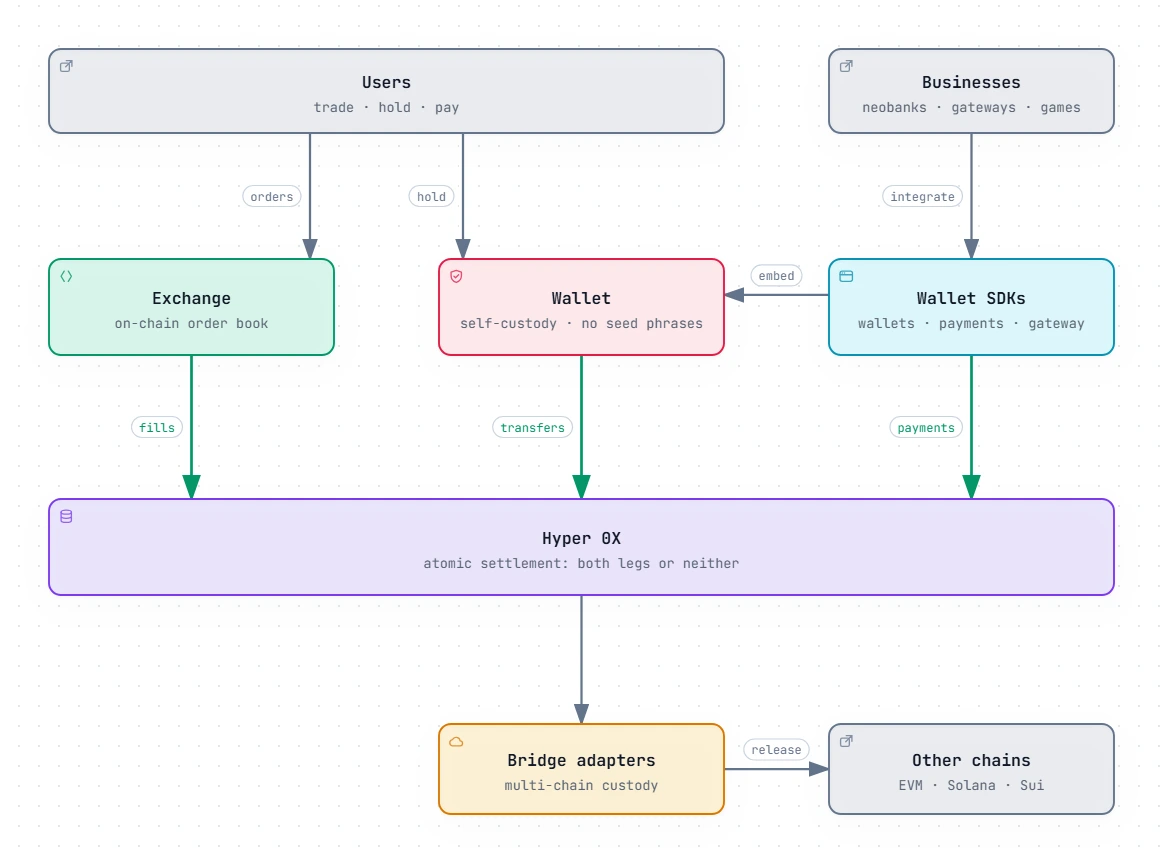
Hyper Wallet is under development. It is designed to have all of these features. The same wallet will also come as SDKs.
Build from scratch: when does it make sense?
Only when the wallet itself is your core product and you have a large, specialised team. You will own every chain integration, every security audit and every incident, for years.
White-label: what do you get?
- Speed: launch on a proven product instead of starting from zero.
- Security: keys stay on the device, with audited signing and encrypted records.
- Your brand and rules: your design, your customers, your limits and approvals.
- One fee, not two: users pay one unified cost instead of an exchange fee plus a wallet fee.
- Settlement you can trust: trades settle atomically on Hyper 0X, our blockchain. See atomic settlement.
What questions should you ask a wallet SDK provider?
- Is the wallet in production, and at what scale?
- Which chains and assets does the wallet support today, and how does the provider add new ones?
- Custodial, non-custodial, or both?
- How does the wallet route swaps, and does it include MEV protection?
- Can you add payments and your own payment gateway with the same SDK?
What can you add beyond the wallet?
Once you have a wallet, you can add payments, a branded payment gateway or a neobank on the same rails. You can even add tokenized assets for your customers. Book a call to see the Hyper Wallet SDKs in action.
Architecture in detail
Frequently asked questions
What is a white-label crypto wallet?
A ready-made wallet that you launch under your own brand. The provider supplies the wallet, swaps, payments and security as SDKs. You control the design, customers and business rules.
Custodial or non-custodial: which should I offer?
Non-custodial wallets keep keys on the user device, which suits retail users who want control. Custodial setups suit institutions that must hold assets for clients. A good SDK supports both.
Which chains should a new wallet support?
Start with the chains your users already hold: Bitcoin, Ethereum and EVM chains, Solana, Tron, TON, XRP and Stellar cover most balances. Add more through bridges as demand grows.
